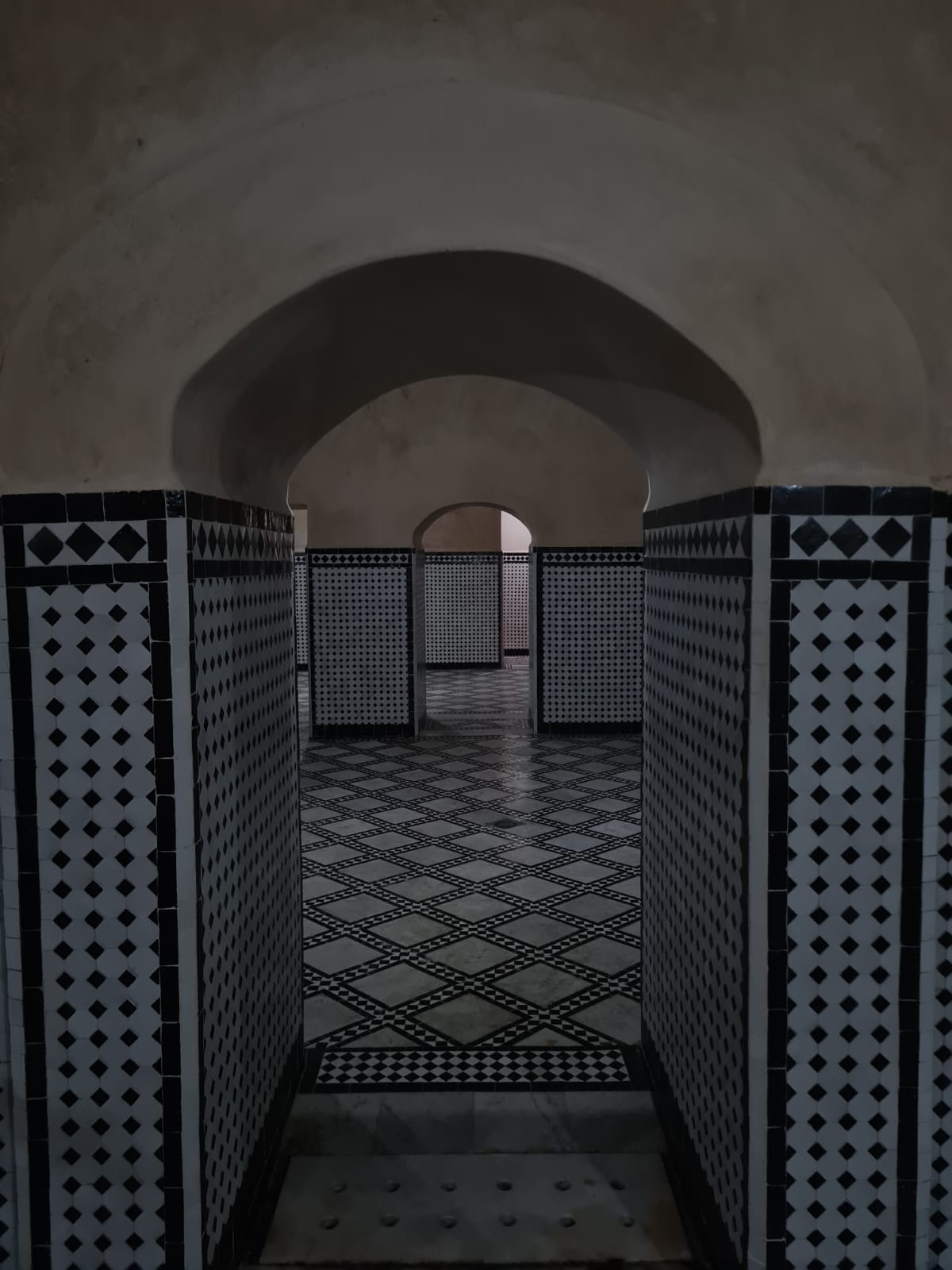

I was standing in a narrow alley somewhere deep in the medina of Marrakech, staring at a plain, unmarked wooden door. Behind it, I could hear the muffled echo of water splashing on tiled floors and the low hum of women’s conversation. A local woman, noticing my hesitation, smiled and gestured for me to follow her inside. That moment marked the beginning of one of the most memorable and humbling experiences of my travels in Morocco: my first visit to a traditional hammam.
I had read about hammams before arriving. I knew the basics. But nothing could have prepared me for the raw, intimate, and deeply human experience of bathing alongside Moroccan women who had been doing this their entire lives. This was not a spa. This was a way of life.
What Exactly Is a Moroccan Hammam?
The word “hammam” simply means “bath” in Arabic, but calling it just a bath would be like calling the Sahara just sand. A traditional Moroccan hammam is a public steam bathhouse that has been a cornerstone of Moroccan social and cultural life for centuries. Every neighborhood in every Moroccan city has at least one, and many families visit weekly.
Historically, hammams emerged alongside mosques and markets as essential pillars of Islamic urban life. Ritual cleanliness (tahara) is a fundamental requirement in Islam, and the hammam became the practical solution for communities where private bathing was a luxury most could not afford. But over the centuries, the hammam evolved into something far greater than a place to wash. It became a social hub, a place for celebration, for gossip, for mothers to scope out potential brides for their sons, and for women to claim a rare space entirely their own.
The Hammam Experience: Step by Step
Arriving and Getting Ready
When you enter a local hammam, you step into a modest reception area where you pay a small fee and are handed a spot on a bench to undress. Most Moroccan women strip down to their underwear, though some go completely bare. As a foreigner, I kept my underwear on and felt perfectly comfortable. You leave your belongings with the attendant and grab your bucket, which you either bring or rent at the door.
The Hot Room (Bit Skhoun)
The hammam is typically divided into three connected rooms, each progressively hotter. You move through the warm room into the hot room, the innermost chamber where the real magic happens. The steam is thick, almost disorienting, and the heat wraps around your body like a heavy blanket. You sit on the warm tiled floor, fill your bucket from the taps along the wall (one hot, one cold), and let the steam open every pore.
I sat there for what felt like an eternity, watching the women around me move with practiced ease, pouring water over themselves, chatting and laughing as if they were sitting in a living room rather than a steam-filled cave. The heat was intense, but the atmosphere was so relaxed that I found myself settling into it naturally.
The Black Soap (Saboun Beldi)
After about fifteen minutes of steaming, it was time for the black soap. Saboun beldi is a thick, dark olive-oil-based paste that looks almost like chocolate mousse. You slather it generously over your entire body and let it sit while the steam continues to work on your skin. The soap softens dead skin cells and prepares them for what comes next. The smell is earthy, natural, and oddly comforting.
The Kessa Glove Scrub
This is the moment that defines the hammam experience. The kessa is a rough exfoliating glove, and when I say rough, I mean it with deep respect. A woman next to me, seeing I was a first-timer, offered to scrub my back. I accepted, having no idea what I was agreeing to.
She attacked my skin with a vigor that bordered on violence. Long, firm strokes with the kessa glove, and within seconds, rolls of gray dead skin began peeling off my body like eraser shavings. I stared at my arm in disbelief. I had showered that morning. I thought I was clean. The hammam had other opinions. By the time she was done with my back, arms, and legs, I felt like I had been reborn in a new skin. Literally.
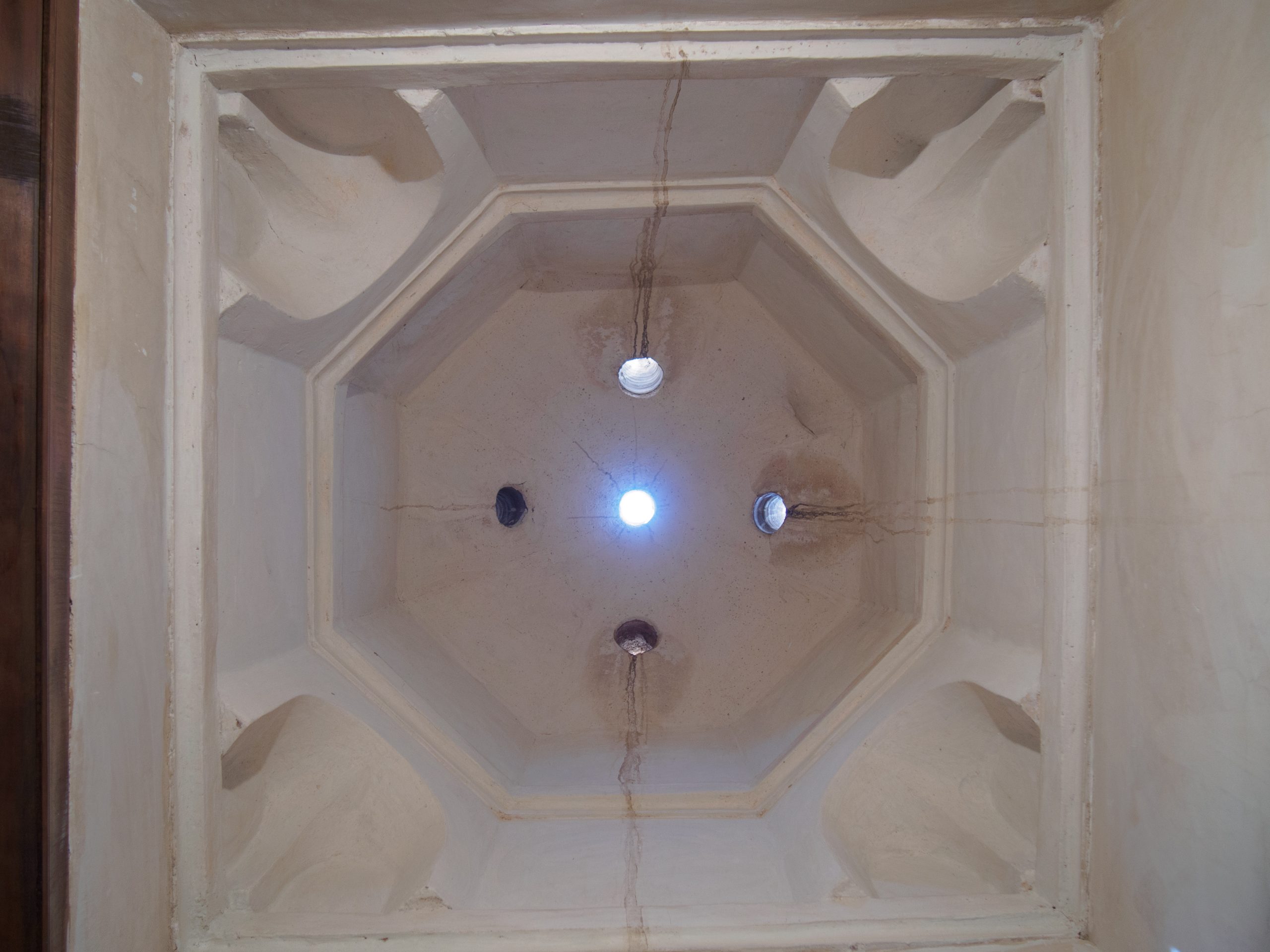
Photo: The distinctive star-shaped skylights of a traditional Moroccan hammam roof at the Bahia Palace in Marrakech. Image: C messier / Wikimedia Commons / CC BY-SA 4.0
The Rinse and Cool Down
After the scrub, you rinse off with buckets of warm water, apply a hair mask or ghassoul (a natural Moroccan clay), and then gradually move back through the cooler rooms. The transition from scorching heat to cool water sends a shiver through your entire body that is nothing short of electric. By the time you step out into the changing area, wrapped in a towel, you feel lighter, softer, and inexplicably calm.
Tourist Hammams vs. Local Hammams: Two Very Different Worlds
Here is where I need to be honest. The tourist hammam experience and the local hammam experience are almost entirely different things, and I strongly recommend both.
The Tourist Hammam
Places like Heritage Spa, Les Bains de Marrakech, or Hammam de la Rose offer a polished, luxurious version. You lie on a heated marble slab in a beautifully tiled private room. A trained attendant performs the scrub and often follows it with an argan oil massage. Everything is pristine, scented, and perfectly comfortable. Prices range from 200 to 500 MAD ($20-50 USD) for a basic hammam session, often more with extras.
The Local Hammam
The neighborhood hammam is a different universe. The tiles might be cracked. The lighting is dim. There are no fluffy robes or cucumber water. But it is authentic in a way that no amount of luxury can replicate. You are sharing space with grandmothers, young mothers with their children, teenage girls, and women of every age and shape, all completely at ease with their bodies and with each other. The cost is typically 10 to 20 MAD ($1-2 USD) for entry, and you can hire a tayaba (scrubbing woman) for an additional 30 to 50 MAD ($3-5 USD).
The local hammam taught me more about Moroccan culture in two hours than any museum or guided tour ever did.
The Social Heart of the Hammam
What surprised me most was not the heat or the scrubbing but the profound sense of community. In the hammam, social barriers dissolve along with the dead skin. Wealthy women sit beside their housekeepers. Age differences vanish. Conversations flow freely, and strangers help each other scrub the spots they cannot reach themselves.
For Moroccan women, the hammam has historically been one of the few public spaces that was entirely theirs. Before weddings, the bride visits the hammam with her female relatives for a ceremonial bath. After childbirth, new mothers return to the hammam as a rite of recovery. During Ramadan, hammams stay open late into the night, buzzing with families preparing for the spiritual month ahead.
Practical Guide: What You Need to Know
What to Bring
- Kessa glove – buy one from any souk for 10-20 MAD
- Black soap (saboun beldi) – available at any local shop or the hammam itself
- A bucket and small bowl – some hammams provide these, but locals always bring their own
- A change of underwear – yours will get soaked
- A towel and flip-flops – the floors are wet and hot
- Shampoo, conditioner, or ghassoul clay – for your hair
- A plastic bag – for your wet things afterward
Etiquette Tips
- Do not stare. Bodies of all kinds are present, and nobody is self-conscious. Follow their lead.
- Keep your underwear on if you feel more comfortable. Many Moroccan women do the same.
- Do not waste water. Fill your bucket and use it mindfully.
- It is perfectly normal to ask a stranger for help scrubbing your back. This is expected and welcomed.
- Women-only and men-only sessions are strictly separated, usually by different hours or different days.
- Tip the tayaba generously. She works incredibly hard in extreme heat.
Where to Find the Best Hammams
In Marrakech: For a local experience, ask your riad host to point you to the nearest neighborhood hammam. For a tourist-friendly option, try Hammam Mouassine or Les Bains de Marrakech in the medina.
In Fez: The medina of Fez is home to some of the oldest hammams in Morocco, including the historic Hammam Seffarine near the famous Seffarine Square. For something more upscale, Spa Laaroussa inside a restored riad offers a beautiful experience.
Cost Summary:
- Local hammam entry: 10-20 MAD ($1-2 USD)
- Tayaba (scrub attendant): 30-50 MAD ($3-5 USD)
- Black soap + kessa glove: 20-40 MAD ($2-4 USD)
- Tourist/luxury hammam: 200-500+ MAD ($20-50+ USD)
Final Thoughts
Walking out of that hammam for the first time, my skin tingling and impossibly smooth, I understood something that no travel guide had told me. The hammam is not about getting clean. You can do that in a hotel shower. The hammam is about slowing down, being present in your body, and participating in a tradition that stretches back over a thousand years. It is about sitting on a warm tiled floor in a room full of steam and strangers and somehow feeling completely at home.
If you visit Morocco and skip the local hammam, you will miss the heartbeat of the country. Go. Be brave. Bring your bucket and your kessa glove. Let a stranger scrub your back. You will leave feeling like a completely different person. And your skin will have never looked better.
