Nusa Penida sits forty minutes off the coast of Bali and looks nothing like it. The cliffs are enormous, the roads are punishing, and the three or four viewpoints you have seen online are packed by ten in the morning. It rewards anyone who stays overnight and frustrates almost everyone who comes for the day. This guide covers how to get there, what is genuinely worth the drive, how long to give it, and the hazards that catch visitors out on an island with very little infrastructure.
Day trip or overnight
Almost every first time visitor books a day tour from Bali. The boat leaves Sanur in the morning, a driver takes you to three or four spots, and you sail back at four in the afternoon.
The problem is arithmetic. The island is twenty kilometres across on roads that average twenty five kilometres an hour, the famous sites sit on opposite coasts, and every day tour follows the same loop at the same hour. You spend the day in a van, arriving everywhere at peak crowd.
Two nights changes the trip completely. You see the west coast at sunset when the day boats have gone, the east coast at sunrise before they arrive, and you stop fighting the timetable. Accommodation on the island is basic compared with Bali and the price reflects that.
Getting there
Fast boats leave from Sanur, with a few departures from Padang Bai and Amed. The crossing takes thirty to fifty minutes depending on the boat and the sea state, and it can be rough when the wind is up.
Boats land at Toyapakeh or Banjar Nyuh, both on the north west coast. Book the return in advance in high season, because afternoon boats fill.
On the island you have three options. A driver for the day is the most common and the most sensible. Scooter rental is cheap and popular, and it is also where most injuries happen, because the hills are steep, the surfaces are broken and the drops are unguarded. If you are not already confident on a scooter in Southeast Asia, this is not the island to learn on.
The west coast
Kelingking Beach
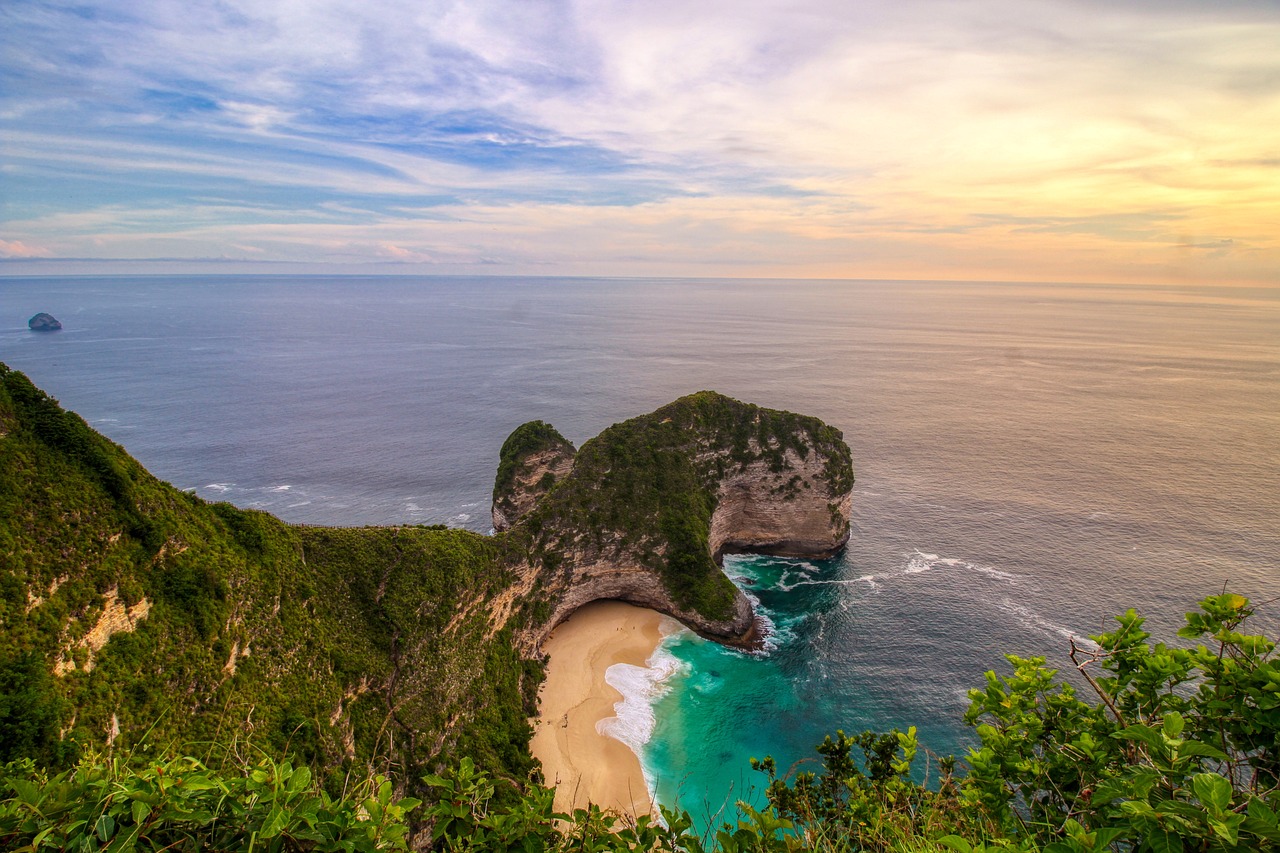
The viewpoint everyone comes for, a headland shaped like the head and neck of a dinosaur with a strip of white sand at the bottom.
The view from the top costs nothing but a walk. The descent to the beach is another matter. It is a steep scramble on eroded steps with a rope line, it takes around an hour down and considerably longer back up in full sun, and people are regularly rescued from it. The sea at the bottom has a strong shore break and is often unswimmable. Look at the climb before you commit rather than halfway down.
Angel’s Billabong and Broken Beach
A natural rock pool and a collapsed sea cave with an arch, five minutes apart. The pool is photogenic at low tide and dangerous when swell washes across it, which has killed people. If waves are breaking into it, stay out and take the photograph from the rock.
Crystal Bay
The main swimming beach on this side, with a gentle entry, and the best place on the island to watch the sun go down. It is also the departure point for divers heading to the channel.
The east coast
Diamond Beach and Atuh Beach
Two neighbouring bays under high cliffs on the far side of the island. The staircase down to Diamond Beach is carved into the rock and is now a proper set of steps rather than the rope it once was. Go early. The east coast catches the sunrise and empties out by mid afternoon when the day tours have moved on.
Peguyangan Waterfall
A blue staircase bolted to a cliff face leading down to spring pools and a small temple. It is a genuine descent with a long climb back, and it is a sacred site, so sarongs are required and swimwear is not appropriate at the pools.
In the water
The diving and snorkelling around Nusa Penida is the reason many people come back.
Manta rays gather at cleaning stations on the south coast throughout the year, and snorkelling with them is one of the few reliable manta encounters in Indonesia. Trips run from the harbours in the morning, and the sea on that side is often choppy.
Between roughly July and October, mola mola come up from deep water into the channel. Those dives are for experienced divers only, in cold water with serious currents.
The currents around this island are strong and unforgiving even for snorkellers. Go with an operator, stay with the boat, and treat any advice about drift seriously.
Where to base yourself
Accommodation splits along the coasts, and the choice decides how much of your stay you spend driving.
Toyapakeh and the north west strip sit closest to the harbour and to the west coast viewpoints. This is where most guesthouses and the majority of restaurants are, and it is the practical choice for a short stay.
Crystal Bay has a handful of places within walking distance of the beach, which means you can watch the sunset without a drive home in the dark on broken roads. That last point matters more than it sounds.
The east coast around Atuh has grown fast, with cliff top bungalows and infinity pools built for the view. Staying there puts you at the sunrise beaches before anyone else and forty minutes from everything else.
Standards across the island are simpler than in Bali at the same price, and the higher end places charge for the location rather than the service. Check whether a property has reliable water and power before booking, because neither is guaranteed.
What to know before you go
- Cash matters. Cash machines exist but they run out, and many warungs and small guesthouses do not take cards.
- Medical care is minimal. Serious injuries mean a boat to Bali, and boats do not run at night.
- Water is scarce on the island. Showers can be brackish and supply is not guaranteed.
- Cliffs have no barriers. Every viewpoint is an unfenced drop, and wet grass on a slope is where people slip.
- Sarongs are needed at temples and at several of the waterfall sites.
How long to stay and when
Two nights is the honest minimum for the island to make sense, three if you want to dive. A single day gives you photographs and a sore back.
The dry season from April to October brings the calmest crossings and the clearest water. January and February are wet, the roads get worse, and boats cancel more often.
Nusa Penida fits naturally at the end of a Bali trip rather than at the start, once you are used to the roads and the rhythm. Our two week Bali itinerary sets out where it slots in alongside the rest of the island, and if waterfalls are what you came for, the Aling Aling falls in the north of Bali are an easier day out.
The honest summary
Nusa Penida is spectacular and hard work in equal measure. Stay the night, hire a driver, start before the boats arrive, and treat every cliff edge and every rock pool as the unguarded hazard it is. Done that way it is the best two days of a Bali trip. Done as a day tour it is a van with a view.

