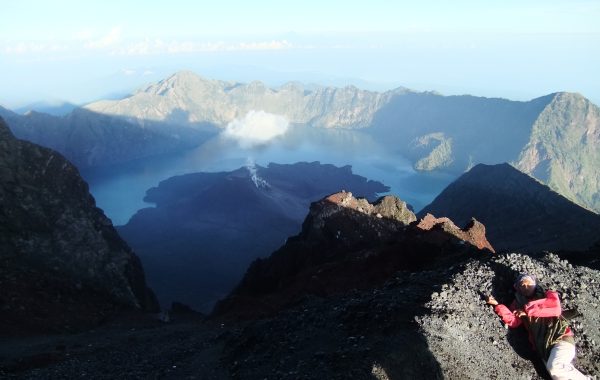
Flores is one of those Indonesian islands that completely rewrites your expectations. While Bali and Java draw the masses, Flores sits quietly in East Nusa Tenggara, offering volcanic landscapes, ancient villages, and some of the most jaw-dropping natural scenery I have ever seen. I spent 10 days crossing the island from west to east, and it became one of my favorite travel experiences in all of Southeast Asia.
This guide covers everything you need to plan your own Flores adventure, from the famous Komodo dragons to the mystical tri-colored lakes of Kelimutu, with a practical day-by-day itinerary and honest tips about what to expect.
Why Flores Should Be on Your Radar
Flores feels like Bali did 30 years ago. The tourism infrastructure is basic, the roads are challenging, and the people are genuinely warm and curious about visitors. Unlike the rest of Hindu-majority Bali, Flores is predominantly Catholic (a legacy of Portuguese missionaries), which gives it a completely different cultural flavor. You will see churches alongside traditional animist shrines, and village ceremonies that blend both worlds.
What makes Flores truly special is its diversity. In a single week, you can snorkel with manta rays, trek to an ancient hilltop village, watch sunrise over color-shifting volcanic lakes, and ride through spider-web rice fields that look like they belong in a fantasy novel. No two days felt the same.
A 7-10 Day Flores Itinerary
Days 1-2: Labuan Bajo — Gateway to Komodo
Most travelers arrive in Labuan Bajo, the small fishing town on the western tip of Flores that serves as the jumping-off point for Komodo National Park. The town itself has transformed rapidly in recent years with new hotels, restaurants, and dive shops popping up everywhere, but it still has a laid-back harbor town feel.
Spend your first day settling in and exploring the waterfront. The sunsets from Puncak Waringin (the hilltop lookout) are stunning. On day two, take a full-day boat trip to Komodo National Park. Most tours include Padar Island for the iconic hilltop viewpoint, Komodo or Rinca Island to see the dragons, and Pink Beach for snorkeling.
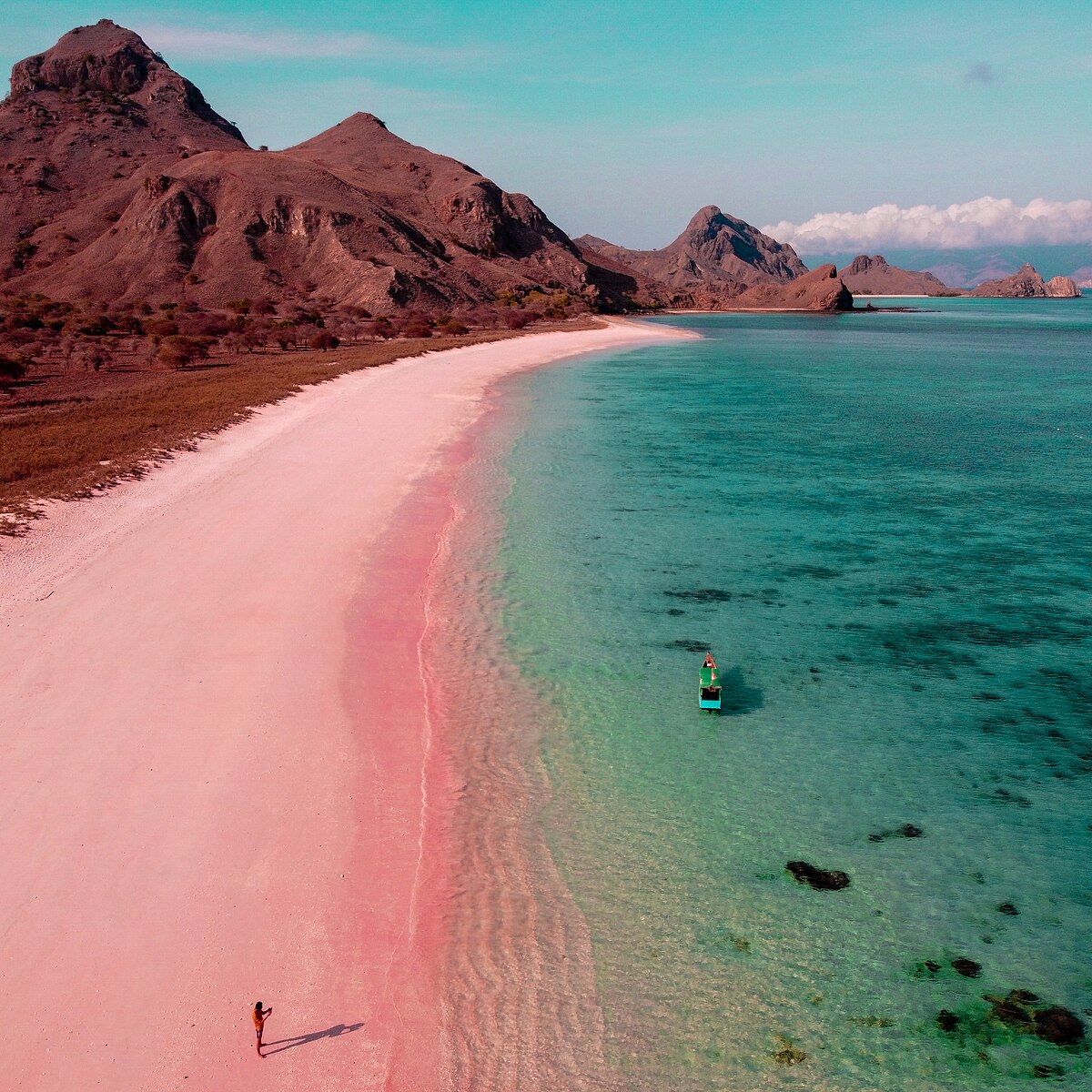
My tip: Choose Rinca Island over Komodo Island if you want a less crowded experience. The dragons are just as impressive, and the trek is more interesting. Budget around IDR 400,000-600,000 ($25-40 USD) for a shared day trip, or significantly more for a private boat.
Days 3-4: Ruteng & Wae Rebo Village
From Labuan Bajo, head east to Ruteng (about 4-5 hours by car). The road is winding but the scenery is magnificent, cutting through mountains and rice terraces. Ruteng itself is a small highland town, cool and quiet, useful mainly as a base for visiting Wae Rebo.
Wae Rebo is the undisputed highlight of Flores for me. This UNESCO-recognized traditional village sits at 1,200 meters above sea level, accessible only by a 3-4 hour trek through dense tropical forest. When you finally emerge from the jungle and see those seven enormous cone-shaped Mbaru Niang houses surrounded by clouds and mountains, it feels like stepping into another century.
You spend the night in one of the communal houses, sleeping on woven mats alongside villagers and other trekkers. The evening ceremony, where the village elder welcomes guests with local coffee and stories, was one of the most memorable experiences of my entire trip. Wake up early to watch the clouds roll through the valley at sunrise.
Logistics: You will need to arrange transport to the trailhead at Denge village (about 3-4 hours from Ruteng, partly on rough roads). A local guide is required for the trek. The total cost including guide, meals, and overnight stay is around IDR 350,000-500,000 ($22-32 USD) per person. Book through your accommodation in Ruteng or directly in Denge.
Day 5: Spider Web Rice Fields (Cancar)
Between Ruteng and Bajawa, make a detour to the Lingko Spider Web Rice Fields near Cancar. These extraordinary circular rice paddies are divided into wedge-shaped plots radiating from a central point, creating a pattern that looks exactly like a giant spider web when viewed from above. Each family in the village receives a differently-sized wedge based on a traditional land distribution system.
The best viewpoint is from the hilltop along the Trans-Flores Highway. The fields are most photogenic during planting season (November-December) when they are flooded, or during harvest (March-April) when they glow golden. Even outside these seasons, the geometric patterns are striking.
Days 5-6: Bajawa & Ngada Villages
Bajawa is a pleasant mountain town and the cultural heartland of the Ngada people. The surrounding traditional villages of Bena and Gurusina are remarkable, with their megalithic stone structures, thatched-roof houses, and living animist traditions. Unlike Wae Rebo, these villages are accessible by road and you can visit them as a half-day trip from Bajawa.
In Bena, the most photogenic of the villages, you will see ngadhu (thatched parasol structures representing male ancestors) and bhaga (miniature thatched houses representing female ancestors) lining the central plaza, with the smoking cone of Mount Inerie as a dramatic backdrop.
Cost: A donation of IDR 20,000-50,000 is expected when visiting traditional villages. If you hire a local guide from Bajawa for a half-day tour, expect to pay around IDR 300,000-400,000 ($19-25 USD).
Days 7-8: Ende & Kelimutu
Continue east to Ende, the largest town on Flores and historically significant as the place where Indonesia’s first president, Sukarno, was exiled by the Dutch. It is worth a brief stop to see the waterfront and the Sukarno exile house, but most travelers push on to the village of Moni, the gateway to Kelimutu.
Kelimutu is the crown jewel of Flores. This volcano holds three crater lakes that each display a different color, ranging from turquoise and green to deep red or black. The colors change unpredictably over months and years due to varying mineral compositions and volcanic gas activity. When I visited, one lake was a brilliant turquoise, another was dark green, and the third was almost black. Locals believe the lakes are resting places for departed souls.
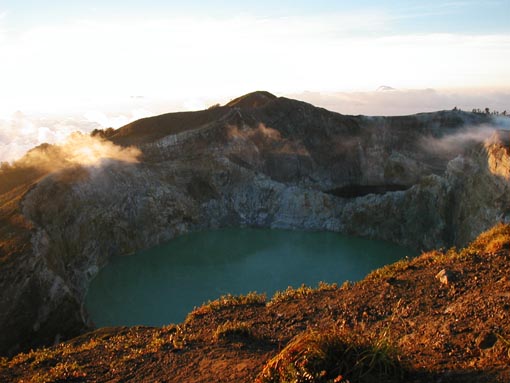
Kelimutu crater lakes, Flores. Photo: Rosino / Wikimedia Commons / CC BY-SA 3.0
The classic experience is the sunrise visit. You leave Moni around 4 AM, drive up to the parking area, then walk 30 minutes to the summit viewpoint. Watching the sun rise over these otherworldly lakes, with mist swirling around the crater rims, is genuinely magical. The entrance fee to Kelimutu National Park is IDR 150,000 for foreigners ($10 USD).
Where to stay: Moni has a handful of basic guesthouses and homestays. Do not expect luxury, but the warmth of the hosts makes up for it. Budget IDR 150,000-300,000 ($10-20 USD) per night.
Days 9-10: Return to Labuan Bajo or Fly from Ende
From Moni, you can either fly out of Ende (which has a small airport with connections to Bali and Kupang) or make the long drive back to Labuan Bajo if you are flying from there. The return journey takes a full day by car. Alternatively, many travelers continue east to Maumere, which also has flight connections.
Getting Around Flores: Motorbike vs. Car and Driver
This is the big decision every Flores traveler faces. The Trans-Flores Highway stretches roughly 700 km from Labuan Bajo to Maumere, and the road conditions vary from decent asphalt to potholed nightmare.
Motorbike: The adventurous option. Rental costs around IDR 80,000-100,000 ($5-7 USD) per day. You get total freedom, can stop anywhere, and it is undeniably thrilling. However, some stretches are genuinely dangerous with steep grades, blind corners, loose gravel, and no guardrails above sheer drops. I would only recommend this if you are an experienced rider comfortable with challenging mountain roads. Fuel stations can be far apart, so carry extra fuel.
Car with driver: The comfortable and safer option. A full-day car with driver costs around IDR 700,000-1,000,000 ($45-65 USD) per day including fuel. Your driver doubles as a local guide, knows the road conditions, and can navigate situations you might struggle with. For a multi-day cross-island trip, you can negotiate a package rate. This is what I did for most of the island and I have zero regrets.
Shared transport: Local buses and shared minivans (bemo) connect the main towns but they are slow, crowded, and run on unpredictable schedules. Useful for budget travelers with flexible timelines.
Best Time to Visit Flores
The dry season from April to October is the best time to visit. Roads are in better condition, boat trips to Komodo are smoother, and trekking to Wae Rebo is less muddy. The peak months are July and August.
The wet season (November to March) brings heavy rain that can make roads impassable and treks slippery. Kelimutu is more frequently shrouded in clouds during this period. That said, the wet season has its own beauty: the rice fields are lush and green, there are virtually no other tourists, and prices drop significantly.
Budget Breakdown
- Accommodation: IDR 150,000-400,000 ($10-25 USD) per night for guesthouses and homestays
- Meals: IDR 20,000-50,000 ($1.30-3.30 USD) per meal at local warungs
- Car with driver: IDR 700,000-1,000,000 ($45-65 USD) per day
- Komodo day trip: IDR 400,000-600,000 ($25-40 USD) shared boat
- Wae Rebo trek: IDR 350,000-500,000 ($22-32 USD) including guide, meals, and overnight
- Kelimutu entrance: IDR 150,000 ($10 USD)
- Total for 10 days: Roughly $500-800 USD depending on your transport choice and comfort level
Final Thoughts
Flores is not the easiest island to travel through. The roads are long, the infrastructure is basic, and you need patience and flexibility. But that is exactly what makes it so rewarding. Every bumpy kilometer is repaid with landscapes that leave you speechless, cultural encounters that feel genuine, and the satisfying knowledge that you are somewhere truly off the beaten path.
If you only have time for one stop, make it Wae Rebo. If you have two, add Kelimutu. But honestly, give Flores the full week or more it deserves. This island changed the way I think about travel in Indonesia, and I suspect it will do the same for you.