
There are very few places on Earth where you feel like you’ve stepped into another era entirely. Komodo National Park is one of them. From the moment I boarded a wooden boat in Labuan Bajo and watched the misty volcanic islands appear on the horizon, I knew this trip would be unlike anything else I’d experienced in Indonesia.
After spending years exploring Bali and Java, I finally made the journey east to Flores to experience the legendary Komodo dragons, the jaw-dropping viewpoints, and some of the most pristine snorkeling waters in Southeast Asia. Here’s everything I learned, saw, and loved about touring Komodo National Park from Labuan Bajo.
Labuan Bajo: Your Gateway to Komodo
Labuan Bajo is a small, sun-baked fishing town on the western tip of Flores island. Over the past decade, it has transformed into the main jumping-off point for Komodo National Park tours. The town itself has a laid-back charm with waterfront seafood restaurants, hilltop sunset bars, and a growing collection of dive shops and tour agencies lining the main road.
I flew in from Bali on a short 1.5-hour flight. There are daily connections from Bali (Denpasar) and Jakarta, with several airlines offering affordable fares. Once you land at Komodo Airport, it’s just a 10-minute drive into town. I’d recommend arriving a day early to get settled, arrange your tour, and catch the incredible sunset from one of the hilltop viewpoints above the harbor.
Choosing Your Komodo Tour: Day Trip vs. Liveaboard
This is the single most important decision you’ll make, and it significantly shapes your experience.
One-Day Boat Tour
The most popular and budget-friendly option. A typical day trip departs Labuan Bajo around 6-7 AM and returns by 5-6 PM. You’ll usually visit 3-4 stops including Komodo or Rinca Island (for the dragons), Padar Island (for the viewpoint hike), Pink Beach, and a snorkeling spot. Expect to pay around IDR 500,000-1,500,000 per person (roughly $30-100 USD) depending on group size, boat quality, and whether lunch is included.
My honest take: A day trip is absolutely worth it if you’re short on time. You’ll see the highlights. But it does feel rushed, especially the Padar Island hike when you’re racing the clock.
Multi-Day Liveaboard (2-3 Days)
If your budget and schedule allow it, this is the way to go. A two or three-day liveaboard lets you sleep on the boat under a canopy of stars, visit more remote snorkeling sites, explore both Komodo and Rinca islands, and take your time at each stop without feeling hurried. Prices typically range from IDR 3,000,000-8,000,000 per person ($200-500 USD) for a 2-day/1-night trip, or IDR 5,000,000-15,000,000 ($350-1,000 USD) for 3 days/2 nights, depending on the boat class.
I went with a 2-day/1-night trip and it was perfect. Watching the sunset from the upper deck of the boat, anchored in a quiet bay with bats streaming overhead, was one of those travel moments you never forget.
Komodo Island: Meeting the Dragons
The main event. Walking into the ranger station on Komodo Island, the air was thick with humidity and anticipation. Our park ranger guide (mandatory, and included in the park entrance fee) led us along a well-marked trail through dry savanna grassland and scattered tamarind trees.
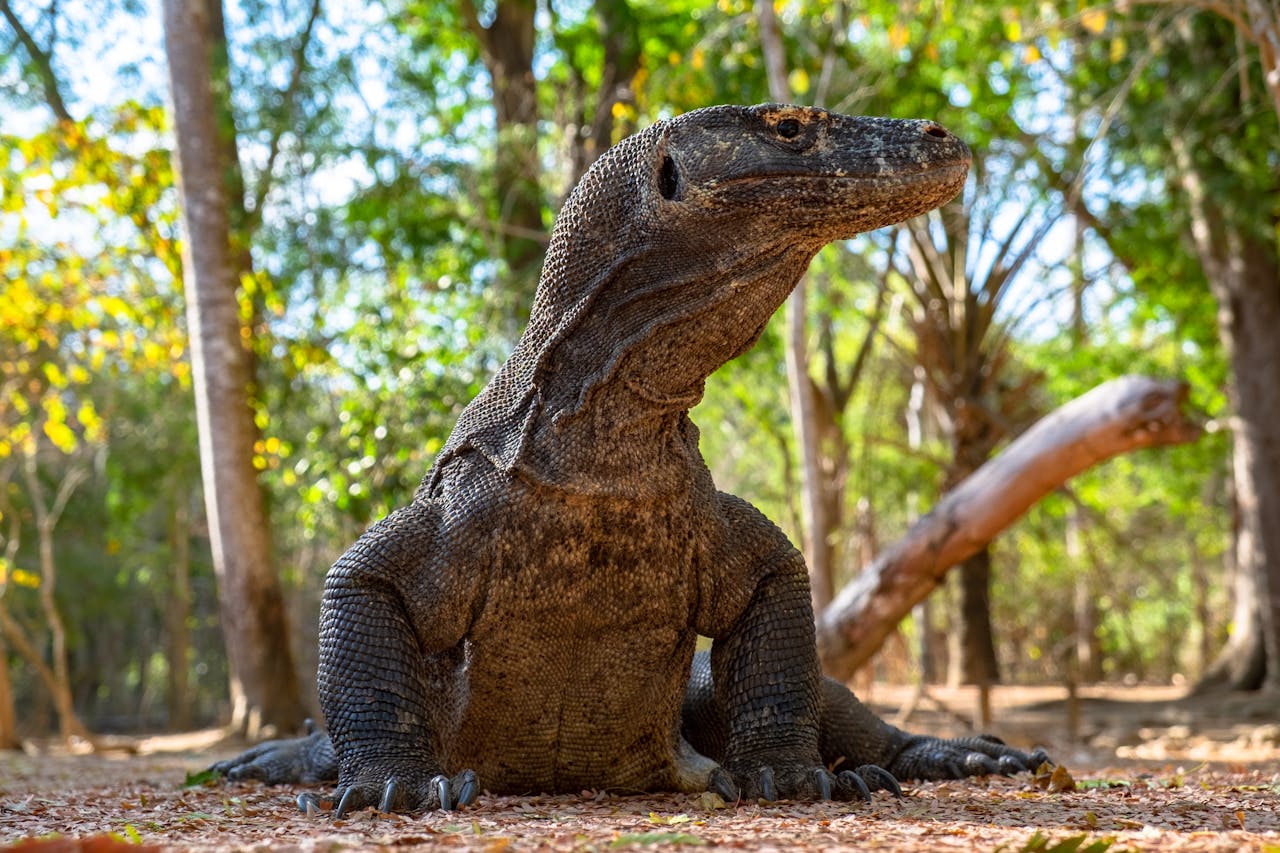
And then, there they were. My first Komodo dragon was resting in the shade near the ranger kitchen, a massive creature stretching about 2.5 meters long with rough, armored skin and a slow, deliberate flick of its forked yellow tongue. It looked prehistoric. Because it is, essentially. These animals have been around for millions of years and Komodo National Park is the only place on Earth where they live in the wild.
We spotted five dragons during our walk, including a smaller juvenile perched in a tree. The rangers are incredibly knowledgeable and keep a safe distance. Despite appearing lazy, Komodo dragons can sprint at 20 km/h and their bite carries dangerous bacteria and venom. Respect them.
Park entrance fee: IDR 350,000 for international visitors on weekdays, IDR 500,000 on weekends and holidays (as of 2024). This includes the guided trek.
Rinca Island: A Quieter Dragon Encounter
If your tour includes Rinca Island instead of (or in addition to) Komodo Island, don’t be disappointed. Rinca actually has a higher density of Komodo dragons, and the trekking experience feels more adventurous. The terrain is hillier, the trails wind through taller grass, and the chances of spotting dragons, water buffalo, wild horses, and deer are arguably better.
Rinca is also closer to Labuan Bajo, which means less boat time and more exploring time if you’re on a day trip. Several travelers I met actually preferred Rinca over Komodo Island for its wilder, less touristy feel.
Padar Island: The Viewpoint That Breaks the Internet
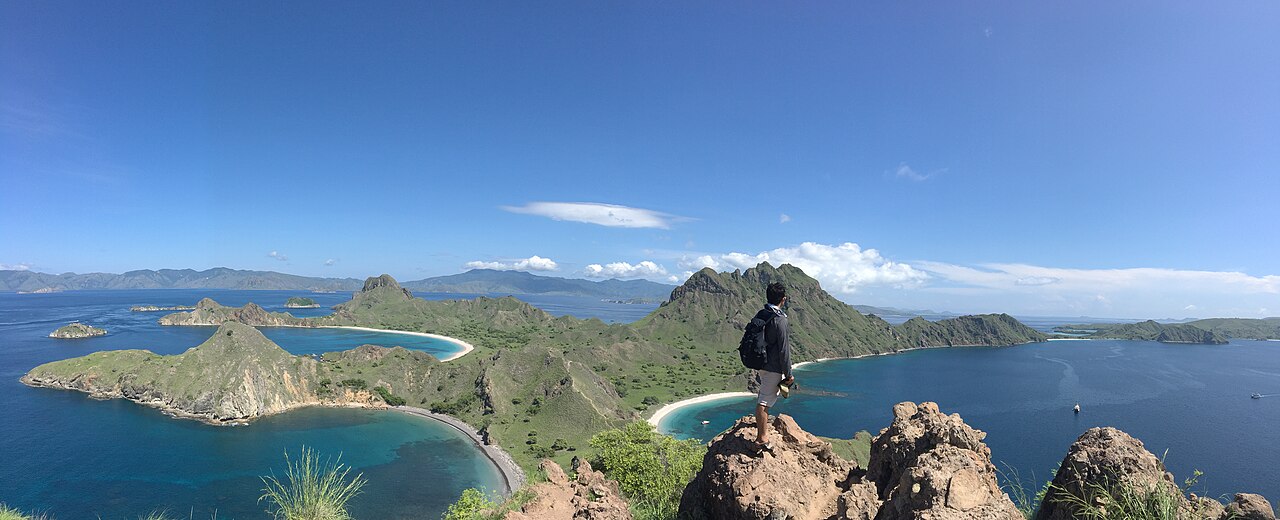
If you’ve ever seen a photo of Komodo National Park, chances are it was taken from the top of Padar Island. And let me tell you, no photograph does it justice.
The hike takes about 30-45 minutes up a steep, rocky trail with no shade. Start early. Bring water. Wear proper shoes, not flip-flops (I saw several people struggling in sandals). The path climbs sharply through dry golden grass, and just when your legs are screaming, you reach the summit.
The view is absolutely breathtaking. Three curved bays sweep below you, each with a different colored beach: white sand, black sand, and pink sand. The turquoise water contrasts against the rugged brown-green hills, and the whole panorama unfolds in every direction with islands dotting the horizon. I sat at the top for 20 minutes, completely speechless.
My tip: If you’re on a liveaboard, request a sunrise hike. The colors at dawn are extraordinary and the trail is empty.
Pink Beach: Nature’s Unlikely Masterpiece
Pink Beach (Pantai Merah) is exactly what it sounds like: a beach with genuinely pink-tinted sand. The color comes from microscopic red organisms called Foraminifera that live in coral and mix with the white sand. It’s most visible when the sand is wet, right at the waterline.
Beyond the novelty of the pink sand, the real treasure here is the snorkeling. I waded in from the shore and within seconds I was floating over a kaleidoscope of healthy, colorful coral teeming with tropical fish. Clownfish, parrotfish, butterflyfish, and even a small reef shark cruised beneath me. The visibility was stunning, easily 15-20 meters.
This was hands-down some of the best shore snorkeling I’ve done anywhere in the world.
Snorkeling and Diving in Komodo National Park
Komodo’s underwater world is just as spectacular as what’s above the surface. The park sits at the convergence of the Indian and Pacific Oceans, creating nutrient-rich currents that support an extraordinary diversity of marine life.
Top Snorkeling Spots
- Manta Point (Makassar Reef): Swim alongside giant manta rays with wingspans up to 5 meters. This was the most surreal wildlife experience of my life.
- Pink Beach: Perfect for beginners, with shallow, calm water and vibrant coral gardens right from shore.
- Taka Makassar: A sandbar that appears at low tide surrounded by crystal-clear water perfect for snorkeling.
- Kanawa Island: A small island near Labuan Bajo with excellent coral reef snorkeling and a relaxed atmosphere.
If you’re a certified diver, Komodo is consistently ranked among the world’s top dive destinations. Popular dive sites like Batu Bolong, Castle Rock, and Crystal Rock offer encounters with manta rays, sharks, sea turtles, and massive schools of fish in strong currents.
Best Time to Visit Komodo National Park
The dry season from April to November offers the best conditions. Seas are calmer, visibility is better for snorkeling and diving, and the golden-brown hills create that iconic Komodo landscape.
The peak season is July-August when European and Australian tourists arrive in numbers. I visited in May and it was perfect: fewer crowds, great weather, and lower prices.
The wet season (December-March) brings rougher seas and occasional rain, but it’s still possible to visit. Some liveaboard trips are cancelled during particularly rough weeks. The upside? Prices drop and the landscape turns lush green.
For manta ray sightings, the best months are December through February, so there’s a trade-off to consider.
What to Bring
- Reef-safe sunscreen – you will burn. The equatorial sun is intense, especially on the boat and during the Padar hike.
- Sturdy shoes or hiking sandals – essential for Padar Island and the dragon treks. No flip-flops.
- Snorkeling gear – tours usually provide masks and fins, but bringing your own ensures a better fit.
- Dry bag – to protect your phone and camera during boat transfers.
- Hat, sunglasses, and a long-sleeve rashguard – sun protection is critical out on the water all day.
- Water bottle – at least 2 liters. Some boats provide water, but don’t count on it.
- Cash (Indonesian Rupiah) – there are limited ATMs in Labuan Bajo and none in the park.
- Motion sickness medicine – the strait between Flores and Komodo can be choppy.
Practical Tips and Things I Wish I’d Known
- Book your tour in Labuan Bajo, not online. Walking into agencies on the main street gives you more bargaining power and you can inspect boats before committing.
- Check the boat. Safety standards vary wildly. Look for life jackets, a shaded area, and a clean bathroom. Ask other travelers for recommendations at your hostel.
- Bring snacks. Lunch is usually included on tours, but it’s often basic. Having extra fruit, nuts, or energy bars is a lifesaver.
- Don’t wear red or strong perfume on the dragon trek. Rangers advise against it, especially for women during menstruation, as Komodo dragons have an extremely keen sense of smell.
- Respect the wildlife. Keep a minimum 2-meter distance from the dragons. Never run. Always follow your ranger guide.
- Support sustainable tourism. Choose operators that follow park regulations and don’t litter or damage coral reefs.
Final Thoughts
Komodo National Park completely blew me away. It’s one of those rare destinations where the reality exceeds the hype. The dragons are awe-inspiring. The viewpoint from Padar Island is genuinely one of the most beautiful things I’ve ever seen. The snorkeling rivals anything in the Maldives or the Great Barrier Reef. And the raw, volcanic landscape feels like nowhere else on Earth.
If you’re already in Bali, Labuan Bajo is just a short flight away. Don’t skip it. Whether you choose a quick day trip or a leisurely liveaboard, Komodo National Park deserves a spot at the very top of your Indonesia itinerary. I left already planning my return trip, this time with a dive certification in hand.

