
Understanding the Geography and Borders of Eastern Europe
Eastern Europe, as recognized today, is one of the four subregions of the European continent, distinguished by a blend of cultural, political, and geographical factors. According to the United Nations statistical classification, this region includes ten sovereign countries: Belarus, Bulgaria, Czechia (Czech Republic), Hungary, Moldova, Poland, Romania, Russia, Slovakia, and Ukraine. This framework serves as the primary reference for major international organizations such as the UN, World Bank, and WHO, ensuring consistency in demographic and economic data across the region.
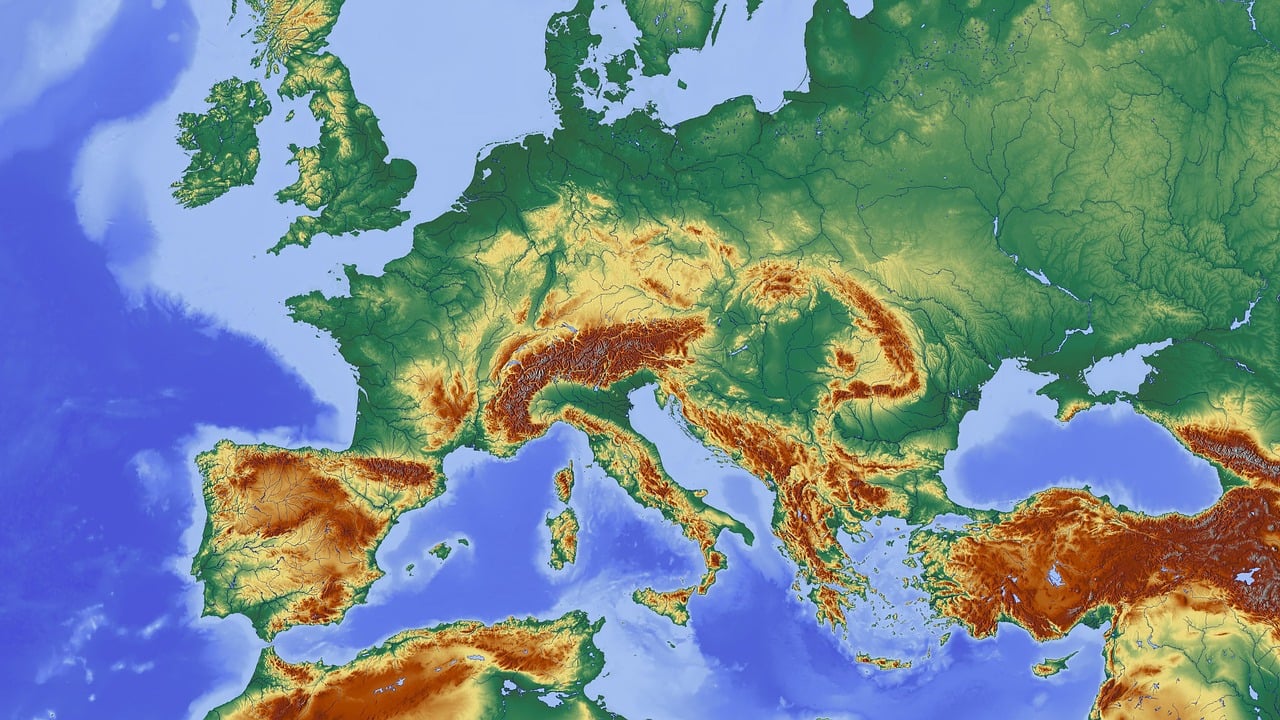
The geography of Eastern Europe is dominated by vast lowland plains and significant river systems. A landmark physical feature is the East European Plain, one of the largest continuous flatlands worldwide, which spans much of the region and supports its extensive agricultural zones. Large river basins like the Volga – Europe’s longest river – the Danube, and the Dnieper shape the landscape and have historically influenced trade routes, population movements, and political borders.
The region’s borders are not always clearly defined in popular use, often varying based on political or cultural interpretations. However, the UN geoscheme offers a precise statistical geography that sets Eastern Europe’s eastern boundary at the Ural Mountains, marking the division between Europe and Asia – a reminder of Russia’s unique transcontinental nature. On the west, the borders blend with Central Europe, demonstrating the fluidity of regional identities.
Exploring the borders further, Eastern Europe has historically been a crossroads of empires and cultures. The fluctuating boundaries have roots in centuries-old events such as the partitions of Poland, the Austro-Hungarian Empire’s expansion, and Soviet Union influence. In 2026, these borders continue to shape geopolitical relationships, especially considering ongoing tensions such as the Ukraine-Russia conflict. Understanding these borders provides critical insights into the region’s complex socio-political landscape.
The regional map reveals an intricate tapestry of neighboring states, with Eastern Europe situated between Northern, Western, and Southern Europe. This placement affects not just geography but cultural exchanges and economic ties. The strategic position along major rivers and trade corridors enhances the region’s role in international commerce and migration patterns, reinforcing the importance of Eastern Europe on the continental stage.
Exploring the Capitals and Important Cities in Eastern Europe
The capitals of Eastern European countries serve as vibrant centers of culture, governance, and history. Minsk, the capital of Belarus, is known for its Soviet-era architecture merged with modern developments. Sofia, Bulgaria’s capital, showcases a rich tapestry of ancient ruins and Orthodox churches, reflecting its long-standing historical significance. In Czechia, Prague enchants visitors with its medieval charm, celebrated for landmarks like the Charles Bridge and Old Town Square, drawing millions of tourists each year.
Budapest, Hungary’s capital, is famously bisected by the Danube River, with the Buda and Pest sides offering distinct experiences – from historic castles to bustling nightlife. Poland’s Warsaw, recovering from significant destruction in World War II, has reinvented itself as a dynamic metropolis, balancing rich heritage with contemporary growth. Moldova’s Chișinău, though smaller, is notable for its Soviet and Romanian influences visible in the city’s architecture and culture.
Romania’s Bucharest combines neo-classical and Communist-era architecture, with landmarks such as the massive Palace of the Parliament standing as a testament to its unique political history. Moscow, the capital of Russia, stands as one of the world’s major cities, known for the Kremlin, Red Square, and its status as both a political heart and cultural hub. Slovakia’s Bratislava is distinguished by its quaint old town and proximity to the borders with Austria and Hungary, positioning it as a key gateway city.
Finally, Kyiv (Kiev), Ukraine’s capital, is a city rich in Eastern Orthodox heritage, fortified by centuries of history, and recently emblematic of resilience and spirit amid ongoing conflicts. Each capital in Eastern Europe reflects the distinctive cultural and historical narratives of its country, while collectively representing the diverse mosaic of the region.
Understanding these urban centers is essential for anyone exploring Eastern Europe, whether for tourism, business, or cultural studies, as they provide significant insights into the broader regional dynamics, economic development, and the evolving identity of Eastern Europe’s countries in 2026.
Key Landmarks and Tourist Attractions Across Eastern Europe
Eastern Europe is rich in landmarks that highlight its unique blend of history, culture, and natural beauty. Notable landmarks include the medieval castles rounding the Polish countryside, such as the Wawel Castle in Kraków, which symbolizes Poland’s royal heritage. In Romania, Bran Castle, often called Dracula’s Castle, captivates tourists with its Gothic architecture and folklore connection.
Bulgaria offers the ancient city of Plovdiv, one of Europe’s oldest continuously inhabited places, boasting Roman theaters and well-preserved medieval architecture. The Czech Republic’s Český Krumlov enchants visitors with its Renaissance-era castle and winding streets, embodying a peaceful blend of history and charm. In Hungary, the Fisherman’s Bastion in Budapest provides panoramic views of the Danube and city skyline, becoming a highlight of the capital’s tourism scene.
Ukraine’s Carpathian Mountains beckon nature enthusiasts with their lush landscapes and traditional Hutsul culture, while the Chernobyl Exclusion Zone has become a site of dark tourism, offering sobering reflections on the 1986 nuclear disaster. Russia’s vast expanse includes iconic landmarks like St. Basil’s Cathedral in Moscow, the Hermitage Museum in St. Petersburg, and the vast Siberian taiga.
Belarus, often overlooked, features the Mir Castle Complex, a UNESCO World Heritage site, and offers pristine natural reserves perfect for eco-tourism. Slovakia’s High Tatras mountain range is a prime destination for hiking and skiing, known for spectacular alpine scenery. Moldova’s wine regions have increasingly gained international attention, inviting tourists to explore vineyards and traditional wine cellars.
These landmarks collectively tell the story of Eastern Europe’s layered past and vibrant cultural present. They play a crucial role in fostering tourism, an industry that contributes significantly to the regional economy and cultural exchange. By visiting these sites, travelers gain a firsthand experience of Eastern Europe’s rich tapestry of history, art, architecture, and natural beauty.
Cultural and Historical Regions Within Eastern Europe
Eastern Europe’s cultural landscape is as diverse as its geography. The region encompasses several historical and ethnic groups, whose heritage continues to shape societal values and traditions in 2026. For example, the Slavic peoples, dominating many Eastern European countries, share linguistic and cultural connections that have evolved over centuries while maintaining distinct national identities.
Bulgaria and Romania, part of the Balkans, possess a rich tapestry of Byzantine and Ottoman influences, visible in their religious architecture, music, and festivals. Hungary’s cultural roots are influenced by Magyar traditions, forming a unique identity distinct from neighboring Slavic nations. The Czech Republic and Slovakia share a common history, previously united as Czechoslovakia, yet have since cultivated individual cultures while keeping strong connections.
Eastern Europe’s Jewish heritage, significantly touched by the devastation of World War II, remains a vital component of the region’s cultural memory. Cities such as Lviv in Ukraine and Kraków in Poland host vibrant Jewish communities, supported by museums and cultural centers that preserve this history.
The region’s complex history of empire, occupation, and shifting borders – from the Austro-Hungarian and Ottoman empires to Soviet influence – has left an indelible mark on languages, customs, and political attitudes today. Folk traditions, from music to dress and cuisine, vary widely, illustrating deep-rooted local identities.
Religious diversity also plays a significant role, with Eastern Orthodoxy predominant in countries like Belarus, Russia, and Serbia, while Roman Catholicism is dominant in Poland and Hungary. Protestant communities add to this mosaic, contributing to vibrant cultural festivals and community life. The intertwining of past and present, tradition and modernity, makes Eastern Europe a rich field for cultural studies and exploration.
Economic and Political Significance of Eastern Europe in 2026
In 2026, Eastern Europe stands as a region of growing economic and political importance within the global context. The area benefits from rich natural resources, fertile agricultural lands, and increasingly diversified economies. Countries like Poland and Romania have experienced steady growth driven by manufacturing, technology, and energy sectors, positioning them as key players within the European Union’s broader economic framework.
Russia remains a significant global power due to its vast size, natural gas, and oil reserves, as well as its political influence on the continent and beyond. However, the ongoing Ukraine-Russia conflict has reshaped regional alliances and security considerations, prompting international diplomatic efforts and defense collaborations, including NATO’s enhanced focus on Eastern European security.
Eastern Europe’s labor market has also seen shifts, with migration patterns influencing both local economies and demographics. Many young professionals move westward seeking opportunities, impacting workforce availability and prompting several countries to implement policies encouraging innovation and foreign investment to retain talent.
Trade routes running through the Danube and Volga rivers continue to facilitate commerce between Europe and Asia, reaffirming Eastern Europe’s role as a transit hub. Infrastructure investments, particularly in railway and highway networks, aim to strengthen connectivity and economic integration.
Politically, Eastern European nations navigate a complex balance between EU integration, national sovereignty, and relations with Russia. This dynamic environment fosters vibrant political debates and evolving alliances. Together with rich cultural heritage and strategic geography, this political-economic landscape makes Eastern Europe a pivotal region to watch in 2026 and beyond.