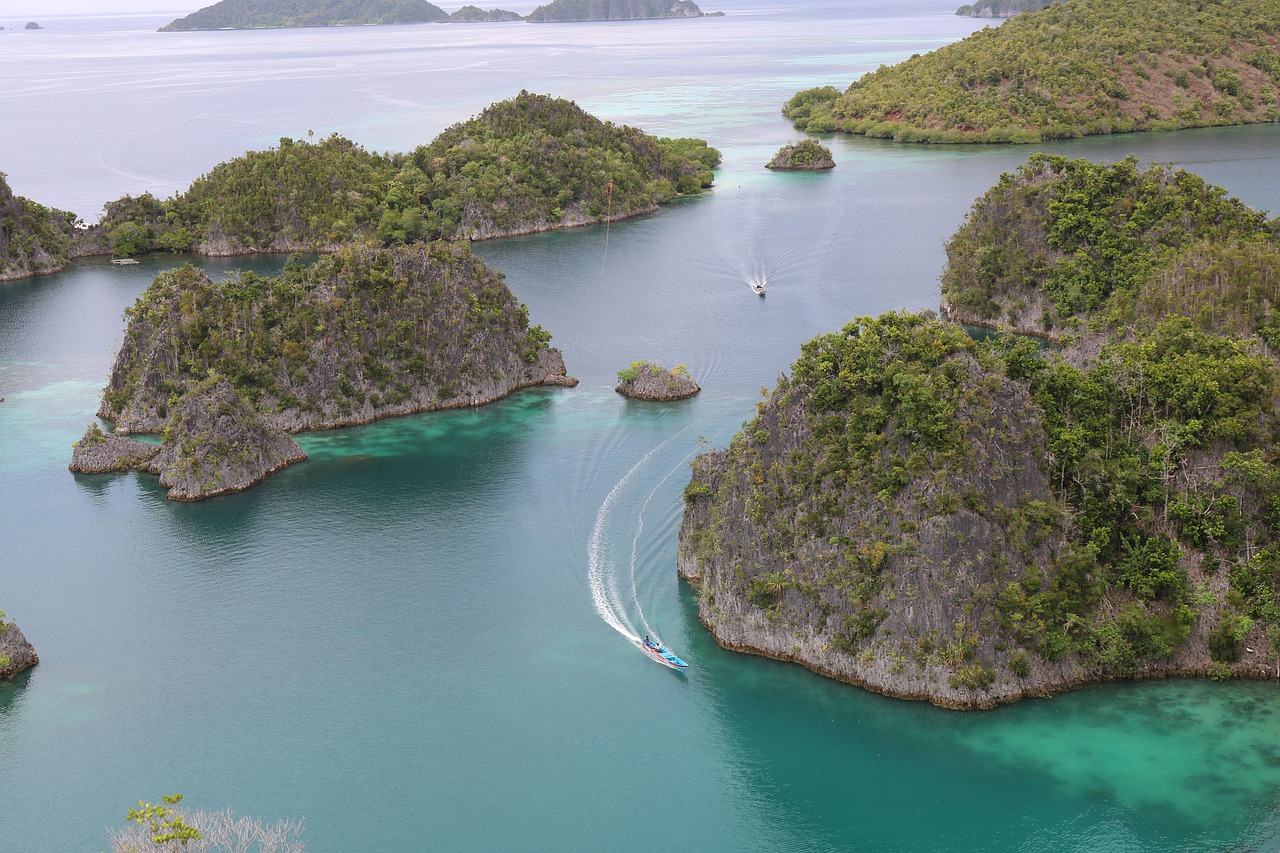

Raja Ampat sits at the far eastern edge of Indonesia, closer to Papua New Guinea than to Bali, and it takes real effort to reach. That effort is the point. Marine surveys here have recorded more fish and coral species per site than anywhere else on the planet, and the islands above the water are just as strange: limestone karst domes covered in jungle, rising straight out of turquoise water with no beach in between.
Where it is, and why the journey matters
Raja Ampat is an archipelago of over 1,500 small islands and cays off the northwest tip of West Papua, Indonesia’s easternmost province. Getting there means flying to Sorong, the gateway town on the Papuan mainland, then taking a ferry or a chartered boat into the archipelago itself. From Jakarta or Bali, that is typically a full day of travel with at least one connection.
This is not a place you visit on the way to somewhere else. Most travellers who make it to Raja Ampat have already spent time elsewhere in Indonesia and treat this leg as the trip’s centrepiece, not an add-on.
The reason divers call it the epicentre
Marine biologists refer to Raja Ampat as sitting inside the Coral Triangle’s most concentrated point, with survey counts exceeding 1,700 fish species and 75 percent of the world’s known coral species recorded in its waters. No other single region comes close on either measure.
- Diving here means drift dives, strong currents and big animals. Manta rays gather at cleaning stations that divers can visit reliably, and reef sharks are common enough that seeing several on a single dive is normal rather than lucky.
- Visibility and conditions vary by site and season, and the archipelago is large enough that a liveaboard boat covering multiple sites over several days sees far more than a single land-based dive centre can reach.
- Snorkelling works almost as well as diving in several spots, since some of the healthiest reefs sit close enough to the surface that a mask and fins are enough to see the coral and the fish moving through it.
Piaynemo and Wayag: the karst islands everyone photographs
The image most people associate with Raja Ampat, a viewpoint over a scatter of jungle-topped limestone domes surrounded by pale blue water, comes from one of two lookout points: Piaynemo or Wayag. Both require a boat trip followed by a steep climb up wooden stairs bolted to the rock, and both reward the climb with the same view that appears on most of the region’s tourism material, minus the crowds you would find at a comparably famous viewpoint elsewhere in Southeast Asia.
Wayag sits further north and is harder to reach, usually requiring a multi-day boat trip or a liveaboard itinerary. Piaynemo is closer to the main tourism hub of Waisai and manageable as a day trip, which makes it the more common choice for travellers with limited time.
Where to stay: homestays, not resorts
Raja Ampat’s accommodation model differs from most of Indonesia. Rather than large resort chains, the islands operate mainly on a homestay system: small, family-run wooden bungalows built on stilts over the water or set back on a beach, run by local Papuan families as the primary form of tourism income in the region.
- Homestays are simple by design, usually without air conditioning or hot water, and meals are cooked and served by the family running the property.
- A handful of higher-end dive resorts and liveaboard operators exist for travellers who want more comfort or a longer diving-focused itinerary.
- Booking ahead matters more here than almost anywhere else in Indonesia. Capacity is limited by design, and boats between islands run on schedules that do not flex easily for a same-day booking.
The conservation fee, and where it goes
Every visitor to Raja Ampat pays a marine park entrance fee, valid for a full calendar year once purchased, which funds patrol boats, ranger salaries and reef monitoring across the marine protected area. The fee is collected on arrival and checked at various points around the archipelago, so keep the card or receipt on you for the duration of the trip.
This funding model is part of why Raja Ampat’s reefs remain in better condition than many more heavily visited dive destinations. Community-managed marine protected areas here restrict certain types of fishing and anchor damage in the highest-value reef zones, a system built with input from the same Papuan communities that run the homestays.
When to go
The calmest sea conditions generally run from October to April, though this window shifts slightly year to year and the archipelago’s size means weather can vary between its northern and southern ends on the same day. The wetter months bring rougher crossings between islands, which matters more here than at most Indonesian destinations given how much of the experience depends on small boats.
Planning around the rest of eastern Indonesia
Raja Ampat pairs naturally with other stops in Indonesia’s less-visited east for travellers with the time budget for it. The island-hopping logic that works for Nusa Penida or the Gili Islands applies here too, just at a larger scale and with far fewer other travellers sharing the boat.