Yogyakarta is the cultural capital of Java and the base for two of the largest temple complexes in Southeast Asia. Most travellers give it a rushed two days between flights, see Borobudur at dawn with three thousand other people, and leave. The city deserves better than that, and the temples require more planning than they used to. This guide covers how the visit works now, what the ticket rules changed, and what else is worth your time once the temples are done.
The city itself
Yogyakarta, usually shortened to Jogja, is one of the few places in Indonesia still governed by a sultanate, and that continuity shows in the streets.
The Kraton
The sultan’s palace sits at the centre of the old city, a walled complex of pavilions where court musicians still perform in the mornings. It is a working residence rather than a museum, which is why parts of it are closed and why the atmosphere is different from a preserved monument.
Taman Sari
The old water castle, a ruined complex of bathing pools and underground passages built for the court in the eighteenth century. The photogenic circular staircase is inside the tunnels, and the site is compact enough for an hour.
Malioboro
The main shopping street, loud, crowded and worth walking at least once in the evening. This is where the batik shops and the street food carts cluster.
Batik and silver
Jogja is the centre of Javanese batik, and the good workshops let you watch the wax and dye process rather than just selling you a printed copy. Kotagede, the old silver quarter, is a quieter half day.
Borobudur
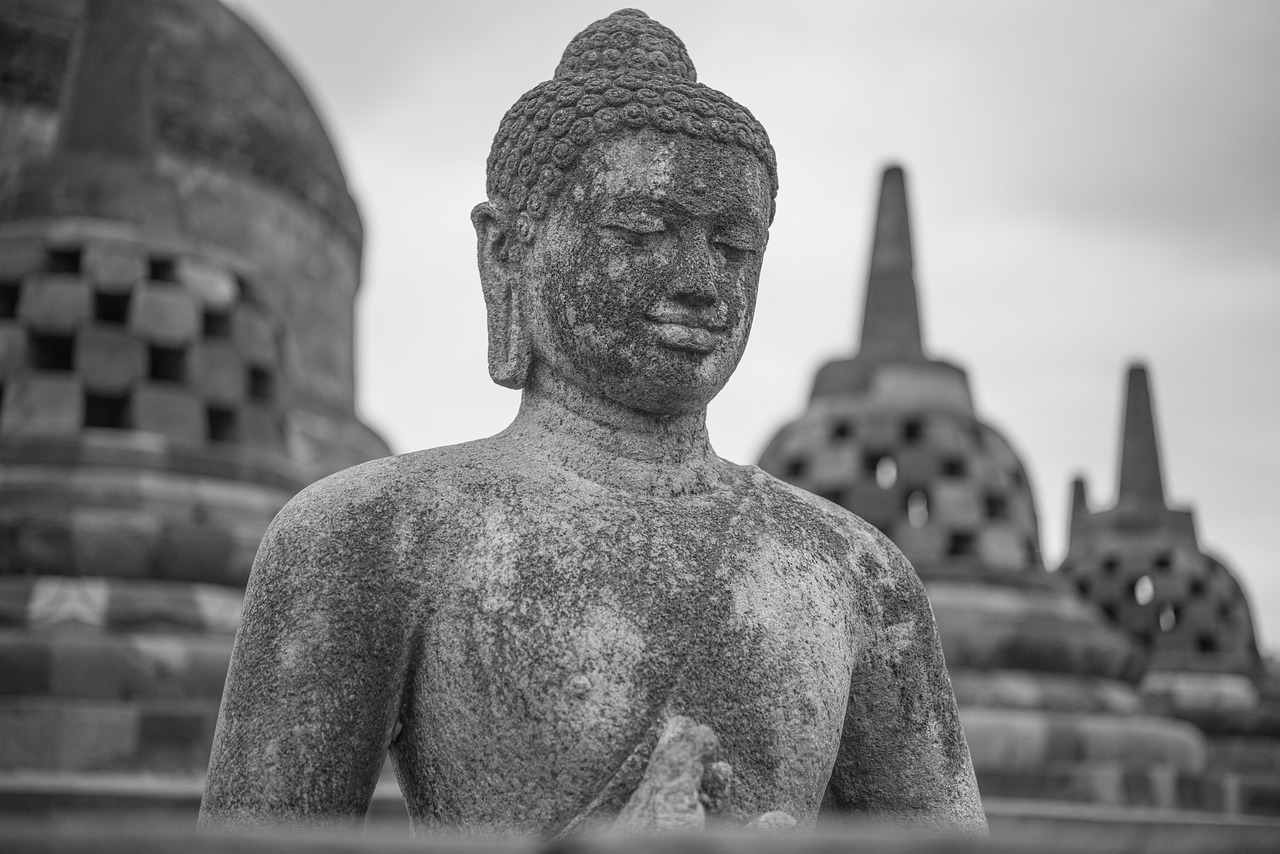
The largest Buddhist monument in the world, built in the ninth century, buried under volcanic ash and jungle for centuries and restored across the twentieth. It is a stepped pyramid of nine platforms carrying more than two thousand relief panels, topped by stupas containing seated Buddhas.
What changed, and why it matters
Access to the upper terraces is now limited. Visitor numbers to the top are capped daily, entry to the structure itself requires a guide, and visitors wear supplied sandals designed to reduce wear on the stone. Tickets for the upper levels sell out, and they cost considerably more than the grounds.
The practical consequence is that turning up on the day and expecting to walk the terraces is no longer reliable. Book ahead if the reliefs are the point of your visit. If you only want the monument from the outside, the park ticket is cheaper and needs less planning.
Sunrise, honestly
The famous sunrise photograph over mist and volcanoes is mostly taken from a hill nearby rather than from the temple. Sunrise access from within the complex is restricted and expensive, and the viewpoints on the surrounding hills give you the wider composition anyway.
The mist that makes those photographs work needs the right conditions, which means the dry season and a still morning. In the wet season you will often be looking at cloud.
Prambanan
Seventeen kilometres east of the city, and the counterweight to Borobudur. Where Borobudur is Buddhist, low and horizontal, Prambanan is Hindu, tall and vertical, a cluster of pointed towers built within a few decades of its neighbour.
The main temples are dedicated to Shiva, Vishnu and Brahma, and the reliefs around the Shiva temple carry the Ramayana story. Several of the smaller structures remain as heaps of stone, because reconstruction requires enough original blocks to be identified before anything can be rebuilt.
In the dry season an open air Ramayana ballet is performed with the temples lit behind the stage. It is touristic and it is also genuinely good.
The two temple complexes sit on opposite sides of the city, so combining both into one day means a lot of driving. Two separate half days works better.
Merapi
The volcano north of the city is one of the most active in the world, and it has erupted repeatedly in living memory. Jeep tours run across the ash fields on the southern flank, past villages destroyed in past eruptions and a small museum built around the remains of a house.
Access depends entirely on the current alert level, which changes. Tours stop when the mountain becomes active, and operators offering to take you higher than the official limit are not doing you a favour.
Eating in Jogja
Javanese food is sweeter than the rest of Indonesian cooking, and Jogja is where that reaches its extreme.
The dish the city is known for is gudeg, young jackfruit stewed for hours in palm sugar and coconut milk until it turns deep brown, served with rice, egg and a fiery beef skin stew on the side. It is traditionally eaten for breakfast, and the well known places open before dawn and sell out by mid morning.
Bakpia, small pastries filled with mung bean paste, are the standard thing to carry home, and the shops around Pathuk sell nothing else.
Street food clusters along Malioboro in the evening at lesehan stalls where you sit on mats on the pavement. Prices are agreed before you eat rather than after, which is worth knowing.
The city also has a serious coffee culture, with roasters working Javanese and Sumatran beans, and cafes that stay open far later than the restaurants.
Getting there and getting around
The international airport sits well outside the city, around an hour away, connected by an airport rail link that is faster than the road.
Trains from Jakarta take most of a day and are comfortable, and the line continues east towards Surabaya, which makes Jogja an easy stop on a cross Java route rather than a detour.
In the city, ride hailing apps work and are cheap. For the temples, hiring a driver for a half day costs little and removes the logistics.
Renting a scooter is common and the traffic in Jogja is calmer than in Bali or Jakarta, though the ring road is fast and the junctions demand attention. Foreign licences are checked at roadside stops more often here than elsewhere in Java, so carry an international permit if you intend to ride.
When to go and how long to stay
The dry season from May to September gives the clearest mornings and the best chance of the volcano views. The wet season from November to March brings afternoon downpours that arrive with some reliability, so plan temples for the morning.
Three nights is the sensible minimum. That gives one morning at Borobudur, one at Prambanan, and one full day for the city, which is the part most people skip and then regret.
Jogja pairs naturally with the volcanoes further east, and anyone crossing Java by train will find the independent route to Mount Bromo is the obvious next stop. If the Buddhist architecture is what draws you, the Brahma Vihara Arama temple in north Bali makes an interesting comparison on a much smaller scale.
The short version
Book the upper terraces of Borobudur in advance or accept the view from the grounds, take the sunrise photograph from a hill rather than the temple, split the two temple complexes across two mornings, and keep a full day for the city. Jogja is not a stopover between flights, and treating it as one is the most common mistake on a Java trip.